GPT-4o-mini (2024-07-18)
GPT-4o-mini (2024-07-18) is a large language model made by OpenAI, added to the catalog on 18 Jul 2024. It has a context window of 128,000 tokens and costs $0.15 per 1M input tokens and $0.60 per 1M output tokens. It accepts text, images and files and produces text. Typical uses: enhance content creation with text and image inputs, develop interactive chat applications and automate customer support with nuanced responses.
Price checked · source: OpenRouter
What GPT-4o-mini (2024-07-18) is
OpenAI's GPT-4o-mini, released on July 18, 2024, is a versatile model designed to handle both text and image inputs, producing text outputs. With a context window of 128,000 tokens, it offers substantial flexibility for various applications. This model supports a range of parameters, including frequency and presence penalties, allowing for nuanced control over its responses. It's part of OpenAI's commitment to providing efficient and cost-effective AI solutions. The model's ability to process multimodal inputs makes it suitable for diverse tasks, enhancing its utility across different domains.
Key features
- Supports text and image inputs
- Outputs are text-based
- 128,000 token context window
- Released on July 18, 2024
- Multiple parameter options
- Multimodal capabilities
Typical uses
- Enhance content creation with text and image inputs
- Develop interactive chat applications
- Automate customer support with nuanced responses
- Create educational tools with multimodal inputs
- Design innovative multimedia projects
GPT-4o-mini (2024-07-18) pricing
US dollars, list price through OpenRouter.
| Item | Standard |
|---|---|
| Input, per 1M tokens | $0.15 |
| Output, per 1M tokens | $0.60 |
| Cached input read, per 1M tokens | $0.075 |
No price change since it was added on 18 Jul 2024.
| What a task costs | Cost |
|---|---|
| Answer a short question500 in / 300 out | $0.0003 |
| Summarise a 50-page PDF25,000 in / 800 out | $0.0042 |
| Review a 2,000-line source file30,000 in / 2,000 out | $0.0057 |
| Read a 300-page contract set150,000 in / 1,500 out | $0.023 |
GPT-4o-mini (2024-07-18) specifications
| Model id | openai/gpt-4o-mini-2024-07-18 |
|---|---|
| Version | gpt-4o-mini-2024-07-18 |
| Context window | 128,000 tokensAbout 96,000 English words |
| Max output | 16,384 tokens |
| Knowledge cutoff | 2023-10-31 |
| Added to catalog | 18 Jul 2024 |
| Input types | text, image, file |
|---|---|
| Output types | text |
| Tool calling | Yes |
| Structured outputs | Yes |
| Reasoning effort control | No |
| Content moderation | Applied by provider |
Sample outputs
The same prompts are given to every model, and the unedited output is shown with the date it was produced. Upend does not publish leaderboard scores it did not run.
Write a short essay
RUN20 Nov 2026Write 150 words on how AI might positively upend work, leisure and creativity
AI has the potential to revolutionize work, leisure, and creativity in transformative ways. In the workplace, AI can automate mundane tasks, allowing employees to focus on higher-level problem-solving and innovation. This shift not only enhances productivity but also fosters a more fulfilling work environment where human creativity thrives. In leisure, AI-driven personalized recommendations can enhance entertainment experiences, from tailored movie suggestions to customized travel itineraries, making downtime more enriching and enjoyable. Moreover, in the realm of creativity, AI tools can serve as collaborators, providing artists, writers, and musicians with new ideas and techniques. By analyzing vast datasets, AI can inspire unique artistic expressions and facilitate experimentation, pushing the boundaries of traditional creativity. Ultimately, the integration of AI into these aspects of life promises to create a more balanced, innovative, and fulfilling existence, where humans can leverage technology to enhance their experiences and unleash their full potential.
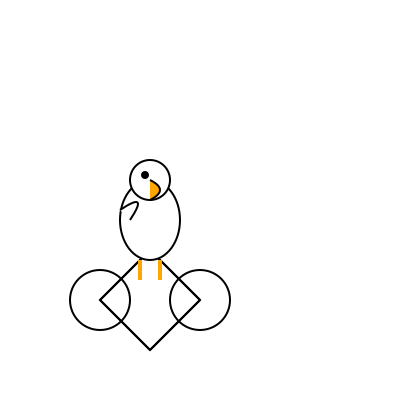
Draw with code
RUN20 Nov 2026Generate an SVG of a pelican riding a bicycle.
Compare GPT-4o-mini (2024-07-18)
Side by side with other models: prices, context window, what each accepts and supports, and the same four tasks priced on both.